

Why do airlines limit checked baggage to a maximum of 23 kg?
Wednesday, 12/11/2025, 10:40 (UTC+07:00)
In the global aviation industry, the 23 kg limit for each piece of checked baggage is a widely accepted standard, applied by most airlines worldwide. This regulation is not only consistent with occupational safety and operational practices, but also stems from agreements reached between regulatory agencies and airlines over many years.
Safety Standards
The International Air Transport Association (IATA) states that the baggage weight limit is not just random; it is based on safety standards that international agencies have researched and recommended. The 23 kg limit is designed to protect the health and safety of airport workers, who lift countless bags every day.
For example, in the United States, the Occupational Safety and Health Administration (OSHA) and the National Institute for Occupational Safety (NIOSH) found that the maximum safe weight that a person can lift regularly in the workplace, including airport baggage handlers, is about 50 pounds (equivalent to about 22.7 kg).
This limit is important to minimize the risk of spine, shoulder, and neck injuries, which are common problems for people working in the airline handling industry. In the past, many airlines allowed heavier baggage, but this led to a significant increase in employee injuries. When IATA and other safety organizations decided to implement a 23 kg limit for each piece of baggage, the number of workplace accidents in the baggage handling area decreased significantly. So the 23 kg limit is not just a rule for passengers; it is actually to protect the health of the workers working on the plane.
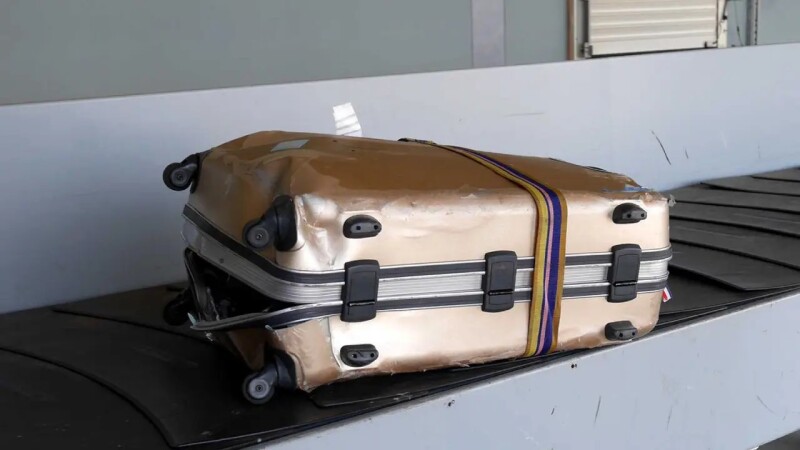
 The 23 kg maximum is set to ensure the health and safety of airport staff. Source: Internet
Optimize operating costs
In addition to safety, the 23 kg limit is also a smart and cost-effective choice for operations. Each flight has a strict weight limit, and the total weight can affect the fuel efficiency of the aircraft.
When all passenger baggage is maintained at a stable level of 23 kg/piece, airlines can more accurately assess the load distribution, fuel consumption and aircraft balance.
According to IATA training materials, for a large aircraft carrying 300 passengers, if each person exceeds the average limit by 2 kg, the total weight will increase by about 600 kg, equivalent to dozens of liters of fuel.
Therefore, complying with the 23 kg limit helps airlines control operating costs and ensure flight safety, while still meeting the baggage needs of most passengers.
On the other hand, this regulation also allows for a more flexible pricing model. Passengers who want to carry more can buy extra baggage or pieces of baggage, generating more revenue for the airline.
According to the 2023 report of IdeaWorksCompany, baggage revenue accounts for more than 20% of total non-ticket revenue for airlines worldwide. Therefore, the 23 kg limit is both a safety measure and a reasonable commercial guideline.
Unity in the global aviation system
One major reason the 23kg limit has become a global standard is coordination between airlines. When passengers have connecting or codeshare flights with different airlines, having a common rule helps prevent problems with baggage transfers.
Since the late 1980s, IATA has defined two baggage systems. The first is based on the number of pieces, with each piece limited to 23kg, used in North America and on transatlantic routes. The second system is based on total weight, usually ranging from 20 to 30kg, and is more common in Europe and Asia.
To create consistency across regions, many airlines have gradually adopted the piece system for all international flights, setting a standard of 23kg for economy class and 32kg for business or first class. This way, passengers don’t have to recalculate their baggage when transferring or connecting flights, making the baggage handling process at the airport much easier.
IATA reports that more than 90% of major airlines now have adopted or recognized the 23kg limit for international checked baggage. Airline alliances such as Star Alliance, SkyTeam and Oneworld have also incorporated this limit into their inter-cargo policies, promoting global consistency.
 The 23 kg limit has become a global standard among airlines. Source: Vietnam Airlines
Finding the right balance between usefulness and portability
A 23kg suitcase typically meets the needs of most travelers for trips lasting between 1 and 3 weeks. A 2022 survey by Travel Weekly found that over 80% of travelers said they “rarely” need to carry more than 23kg of luggage, unless they have specialized equipment or special items.
This suggests that the 23kg standard is not just a technical number, but also aligns with actual user travel behavior.
This limit simplifies how airlines handle special baggage. Bags over 23kg usually need to be individually packaged and marked as “heavy” for manual handling or the use of assistive devices. This helps ensure safe handling and prevents damage during loading and unloading.
While the 23kg checked baggage limit is common, it is not a strict national regulation. Some Asian, European or low-cost airlines still apply the lower limit of 20 kg. On the other hand, business and first class passengers may be allowed to check in 32 kg or more per piece.
The International Civil Aviation Organization (ICAO) does not set a specific weight, but leaves it to the airlines to decide, while ensuring operational safety. However, due to consistency in trade and supply chains, 23 kg has become a global standard that airlines follow to ensure consistency in the system.
As the aviation industry moves towards a “green” and energy-efficient model, adhering to the 23 kg guideline also helps reduce payloads, thereby saving fuel and reducing carbon emissions. Although this may change over time or with advances in automated loading technology, 23 kg is still the most reasonable limit for checked baggage today.
>>> See more: Vietnam Airlines' latest carry-on and checked baggage regulations 2025
Back to category
Share:


Other news in the same category